The Creative Edge: Why Vector Floral Frame Design Elevates Every Project
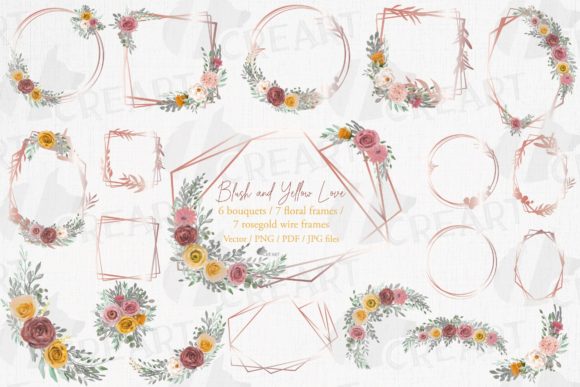
In the visual world, few motifs blend natural elegance with structural beauty quite like floral frames. They’re the gentle embrace around wedding invitations, the decorative whisper on lifestyle blog headers, and the anchor of a brand’s botanical identity. A Vector Floral Frame Design isn’t just a picture—it’s a gateway to infinite customization, built on mathematics rather than pixels. This core difference matters more than most designers realize. When you move beyond static rasters into the realm of vectors, you unlock a fluidity that saves hours of frustration and guarantees a crisp finish at any scale, from a tiny sticker to a storefront banner.
The typical creative process demands reliability. Imagine crafting a poster that needs to look flawless on both a smartphone screen and a printed A2 sheet. With pixel-based images, you constantly battle blurry edges or jagged artifacts when scaling up. The beauty of a well-organized vector set lies in its resolution independence—the lines stay sharp, the curves remain silky smooth, and even the most delicate petal vein retains its integrity. That’s not just a technical perk; it’s peace of mind. This article walks you through what makes a high-quality floral frame bundle not merely good, but indispensable, and how the right file formats, layered structure, and color flexibility can become the backbone of your design toolkit.
Vector vs. Raster: Understanding the True Value of Scalable Art
Let’s strip away the jargon. A vector file describes shapes using mathematical equations—points, lines, curves, and polygons. That means when you resize a vector floral frame, you’re not stretching an image; you’re recalculating the geometry. Print it at 10 inches or 10 feet, and the sharpness never wavers. This resizable without losing quality trait is the hallmark of professional assets. In contrast, a raster image (like a standard JPG) is made of a fixed grid of dots. Enlarge it, and you start seeing the grid—softness, blocks, broken details. For something as intricate as flowers, leaves, and intertwining vines, that loss of quality destroys the elegance.
When you download a pack that includes a high-resolution JPG, you receive a ready-to-use raster version that’s already set to a massive pixel dimension—great for immediate digital placement where you don’t need to edit paths. But the real treasure is the accompanying vector files: EPS, AI, and SVG. Each of these preserves your ability to open, edit, and customize every single petal. So whether you’re using Adobe Illustrator, CorelDRAW, Inkscape, or even cutting machine software, you’ll find a format that integrates seamlessly. This duality—raster for quick show, vector for deep customization—is what separates a thoughtful bundle from a random download.
Inside the File Package: More Than Just Pretty Pictures
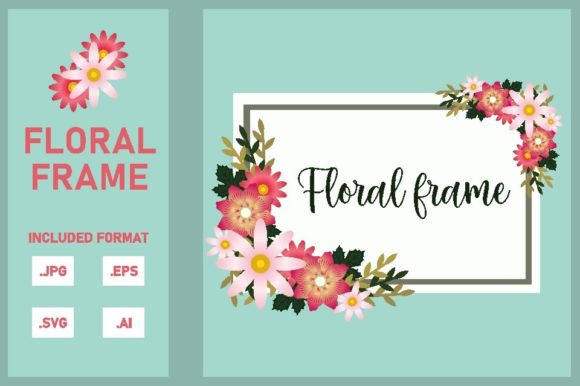
Let’s get concrete. You click download, unzip the folder, and you’re greeted with four file types. Here’s exactly how they serve you:
- JPG: A high-resolution raster version, often 300 DPI and large enough pixels for immediate social media posts, blog graphics, or placeholders. No special software needed.
- EPS: The universal vector format. It opens in nearly any design software, preserves layers, and is widely preferred by printers and vinyl cutters. Your go-to for professional print jobs.
- AI: Adobe Illustrator’s native format. If you work in the Adobe ecosystem, this retains all layer organization, editable paths, and any applied effects in the most native way possible.
- SVG: The web-friendly vector. It’s lightweight, code-based, and perfect for website use, crafting software (like Cricut Design Space or Silhouette Studio), and any screen-first project. SVGs can be styled with CSS when used online.
Having all four means you’re never locked into a single workflow. I’ve seen designers use the AI file to craft a brand identity board, the EPS to send a label design to a packaging manufacturer, the SVG to animate a loading screen on a website, and the JPG to quickly mock up a Pinterest pin—all from the same Vector Floral Frame Design. It’s the kind of flexibility that becomes addictive once you realize how much time it shaves off file conversions and “please resend in a different format” emails.
The Magic of 100 Shapes and Truly Organized Layers
Quantity without organization is noise. A folder cluttered with unnamed, ungrouped vectors turns creativity into a tedious treasure hunt. That’s why the emphasis on 100 vector shapes resizable and organized layers isn’t a buzzword—it’s a usability revolution. Think of it this way: you open the file and immediately see clearly labeled layers or groups. Perhaps all roses are separated, all leafy swags sit in their own container, and the main frame outlines are isolated. With a single click, you can mute the elements you don’t need and spotlight the ones you do.
For example, you might be designing an invitation suite that requires only the left-side floral cluster without the top archway. Instead of painstakingly deleting anchor points, you hide that layer and export a clean composition. Later, for the RSVP card, you reactivate the top arch and pair it with a different set of leaves. This non-destructive editing environment encourages experimentation. You start asking “what if I combine the peony from one shape with the wreath from another?” and because the source files are built with independence in mind, the answer is almost always “yes, and easily.” The 100 shapes aren’t just a number; they’re a palette of botanical components that you can mix, match, and scale independently, giving you thousands of potential framed compositions from a single download.
Quick Color Shifts: From Vision to Variation in Seconds
Imagining a floral frame that perfectly matches a wedding’s dusty rose palette or a company’s teal and gold branding used to involve hue sliders, adjustment layers, and cautious masking. With a properly constructed vector file, changing colors becomes almost embarrassingly simple. Select the shape, pick a new fill or stroke color, and the entire element transforms while keeping its shading and subtle gradients intact. Want all the greenery to become eucalyptus-blue rather than sage? Select similar fills, and you’re done in a few clicks.
This possible and easy change color attribute reshapes how we approach seasonal rebranding or client revisions. Imagine a bakery that uses the same floral frame for its website header but needs to shift the floral hues from soft spring pastels to rich autumn burgundies and golds come October. With vector files, you don’t need to search for a new asset; you simply recolor the existing one. Print-on-demand sellers love this because they can offer the same floral mug design in 15 colorways without rebuilding the wheel each time. The speed feels like cheating, and suddenly one Vector Floral Frame Design supports an entire product line.
High Resolution, High Stakes: Outputting for Every Medium
Resolution can make or break a project’s perceived quality. The included JPG is already set at a generous pixel count, ensuring that even when you use the raster version for digital, it doesn’t pixelate on retina screens or large monitors. But the vector files are inherently infinite in resolution. When you send an EPS to a printing company for a 24 by 36 inch poster, the text on the proof will look laser-sharp. For fabric printing or laser engraving, the smooth curves translate directly to physical media without the “stair-step” effect that plagues rasters.
Petite details—like tiny stamen dots, fine vine tendrils, or delicate filigree between flowers—remain intact. That’s crucial for products where people will view them up close: greeting cards, jewelry, or packaging. The phrase high resolution here goes beyond pixel count; it’s about the fidelity of every artistic stroke. Because the designer built the artwork with clean anchor points and minimal unnecessary nodes, the machine or printer reads the instructions effortlessly, producing a result that feels tangible and premium.
Seamless Integration into Modern Creative Workflows
Today’s creative isn’t tied to a single software. You might sketch a rough layout in Procreate, build the final vector in Affinity Designer, share an SVG preview with a client via browser, and then send an EPS to the print shop. The file set you download—JPG, EPS, AI, SVG—slots into each step without friction. And because the layers are so well-structured, collaboration becomes smoother. When working with a team, you can hand off the AI file knowing that another designer won’t accidentally mess up the arrangement; they can simply hide or adjust layers based on the task.
For crafters who use cutting machines like Cricut or Silhouette, the SVG is the hero. Upload it, and the software immediately recognizes the cut lines. Resizing for a tumbler or a t-shirt is a matter of dragging a corner; no need to manually trace or clean up fuzzy edges. The easy to use for color aspect extends here as well—often, cutting machines allow you to assign different actions (cut, score, draw) by color, so a well-layered vector with distinct color assignments cuts down the headache of manual assignment. This isn’t just convenience; it’s the difference between a hobby craft and a scalable small business.
Beyond the Download: Creative Possibilities Unlocked
Let’s step into practical scenarios. A stationery designer needs a symmetrical “thank you” enclosure card frame. She opens the AI file, selects one half of the floral ring, mirrors it, and within minutes has a perfectly balanced design that matches her existing suite. A web designer grabs the SVG and, using CSS, animates the floral frame to gently rotate or grow on hover, adding a whimsical interactive element to a portfolio site. A social media manager uses the high-res JPG as a masked border for Instagram story templates, dropping client photos into the center with a consistent, branded botanical edge. A small business owner uses the EPS to have a wooden sign engraved for their shop entrance; the vector paths translate directly to the laser cutter’s coordinates.
Each of these applications was made possible not just by the floral design itself, but by the underlying structure of Vector Floral Frame Design assets. The promise of 100 shapes means you aren’t limited to one aesthetic. Mix a romantic wreath with a modern minimalist frame by overlaying different shapes and adjusting opacities. Because everything is resizable, you can zoom in on a single flower and use it as a standalone logo icon, then weeks later pull the full frame for an event backdrop. The asset essentially scales with your ambitions.
There’s also a subtle psychological benefit to organized files. Cluttered asset libraries drain creative energy. When you know that your downloaded floral pack has logically named layers and grouped elements, you’re more likely to reach for it spontaneously rather than procrastinate because “it’ll take ages to clean up.” That spontaneity leads to more play, more iteration, and ultimately stronger designs. It turns a static download into a living part of your toolkit.
What You Get and Why It Matters
To summarize the tangible deliverables, you’re not just receiving a single image. The bundle includes a thoughtful mix of the practical and the powerful:
- Image JPG – Immediate high-resolution raster for quick deployment and mockups.
- Vector EPS – The print-industry standard, editable and non-destructive, perfect for professional production.
- Vector AI – Adobe-native file with full layer preservation and easy path editing.
- Vector SVG – Web- and craft-ready, lightweight, and universally supported by modern software.
Each format was chosen not for marketing filler, but because real-world projects demand it. A bride designing her own invitations can use the SVG in Cricut Design Space, then send the EPS to a local printer for the final invites. A graphic designer can place the AI file into a large-scale trade show banner layout without once worrying about pixelation. The high resolution of the JPG means even the non-designer can immediately use the frame in Canva or Word without installing additional software. It’s a surprisingly inclusive approach; you don’t need to be a tech wizard to get stunning results.
The layers and 100 shapes aren’t an afterthought. They are a manifestation of how the design was built—with intention. You might open the file and find that every floral cluster is a grouped collection of leaves and blooms, further nested into logical sub-layers. This isn’t just tidy; it’s a teaching tool. By examining how a professional assembles a complex frame, you learn about composition, balance, and modular design. Over time, you might even start combining elements from different downloads, but the foundation of solid organization sets the standard.
At its heart, a Vector Floral Frame Design bundle like this represents a shift from passive decoration to active creative exploration. The moment you realize you can change the color of every rose from red to blush pink with two clicks, or that you can extract a single vine to use as a delicate border, you stop seeing design assets as fixed. They become clay. And that clay is always sharp, always scalable, always ready for the next canvas. Thanks for downloading—may your projects bloom with a new level of detail and ease.