Choosing a Beautiful Floral Background with Lily Flowers for Your Creative Projects
Visual identity often begins with a single, well-chosen background. A beautifully composed floral setting can elevate invitations, packaging, social media graphics, or branding materials without dominating the message. When that background centers on the lily—a flower long associated with purity, renewal, and quiet elegance—the result tends to feel both graceful and versatile. A resource like the Beautifull Floral Background Lily Flower template design offers a ready-to-use starting point that saves time while leaving room for personal interpretation. Understanding what makes such a template distinct, how it compares to other options, and where it fits best can help you commit to a design choice with confidence.
What Defines This Lily Flower Background and Why It Gets Attention
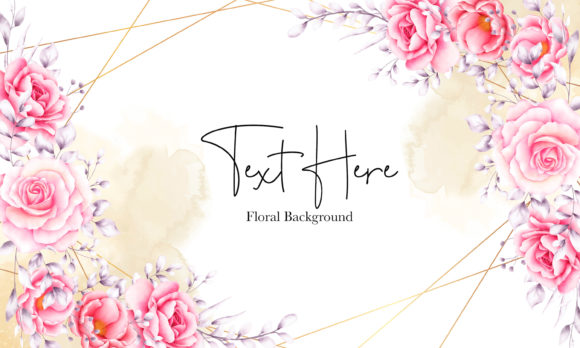
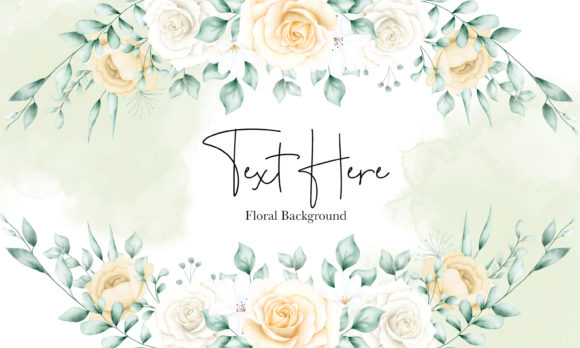
The Beautifull Floral Background Lily Flower is built around a detailed floral vector that combines blooming lilies with complementary leaves. Because it is created as a vector, the artwork remains crisp at any size—whether scaled down for a business card or stretched across a large banner. The editable nature of the files means you can adjust colors, remove or reposition elements, and adapt the composition to your own layout needs. Delivered in multiple formats—JPG for quick placement, EPS for broad vector compatibility, and AI for Adobe Illustrator users—it accommodates different workflows. This level of flexibility is one key reason designers and non-designers alike find such templates practical. You are not locked into a final static image; you start with a professionally arranged floral scene that can be reshaped to match a brand palette, a wedding theme, or a seasonal mood.
Another defining aspect lies in the attention to the lily’s form. Lilies are recognizable but not overpowering. Their large petals and gentle curves work well as a backdrop because they offer structure without excessive detail that competes with overlaid text. The accompanying leaves add movement and balance, preventing the composition from feeling too centered or static. For someone comparing this to a generic floral pattern, the intentional botanical layout feels more polished and less repetitive. It presents as a scene rather than a repeating tile, which matters for pieces that demand a focal point—a book cover, an event flyer, or a header image where rhythm and flow influence readability.
Vector and Raster Floral Backgrounds: A Practical Comparison
When evaluating any floral background resource, the distinction between vector and raster formats shapes almost every practical decision. The Beautifull Floral Background Lily Flower includes both, which gives you the best of both approaches, but knowing when to rely on one over the other is useful.
A vector file—EPS or AI—stores the image as mathematical paths. That means you can scale it infinitely, edit individual petals or leaves, change line weights, and recolor elements precisely without degradation. For a lily background meant for large-format printing, signage, or merchandise, vectors are essential. You can also extract individual floral elements to create separate motifs, borders, or icons. This makes the editable vector approach especially appealing for branding projects where one flower might need to appear across multiple touchpoints in varied forms.
Raster images like JPGs are pixel-based, so they are resolution-dependent. For a quick social media post, a web banner, or a digital invitation that won’t be enlarged, a high-resolution JPG version of this lily background is often enough and far easier to handle. You drop it into a design, maybe add a semi-transparent overlay for text readability, and publish. The tradeoff is that deep customization is limited—changing a pink lily to white, for example, becomes a photo-editing task rather than a quick selection in Illustrator.
Comparatively, a purely raster floral stock photo offers photographic realism but rarely allows the same compositional control. A purely vector stock file may be editable but sometimes lacks the natural, painterly finish that vectorized botanical elements can achieve. The combination of formats in this template attempts to bridge that gap: you get the editability of vector with a ready-to-use JPG for instant application. The limitation, as with any template, is that you are still working within the original botanical style. If your project calls for a hyper-realistic, photographic lily background, this floral vector interpretation may feel slightly more illustrative than true-to-life—a difference that matters more for luxury cosmetics packaging than for a whimsical party invite.
When a Floral Lily Background Outperforms Other Botanical Themes
Designers often face a sea of floral choices: wildflower mixes, rose arrangements, tropical monstera leaves, soft watercolor blooms. Each conveys a different emotional register. The lily, by nature, tends to land in a space that is elegant yet approachable. It avoids the overt romanticism of roses and the rustic feel of sunflowers. This makes a lily background a strong candidate for projects that need a sense of serenity, a touch of formality, or a timeless botanical presence.
Consider a few real-world comparisons. A wedding stationery suite that uses casual wildflowers might suit a garden party; a lily-focused design instead supports a more refined evening ceremony. A skincare brand aiming for a fresh, clean, and botanical identity might find the lily’s association with purity more aligned than a rose’s perfume-heavy connotation. A memorial program or sympathy card often leans on lilies for their quiet symbolism, making the Beautifull Floral Background Lily Flower an appropriate choice in sensitive contexts where other bright florals could feel jarring.
Conversely, if the goal is vibrant energy, youthful playfulness, or rustic warmth, a lily background might feel too restrained. A children’s birthday invitation, for example, could better suit a bolder, more cartoonish floral pattern. A harvest-themed flyer might pair better with sunflowers and wheat. Understanding this emotional fit is essential: the template works best when the mood you need aligns with what the lily naturally provides. The strength of this resource is that you can still alter the colors to skew the mood—deepening greens and muting whites for a moodier, autumnal feel, or brightening petals to pastels for spring. The editability lets you push the flower’s tone, but the floral form itself remains structured and graceful.
Editable Template Versus Custom Illustration: Deciding Based on Time, Budget, and Control
One of the most frequent comparisons potential buyers make is between purchasing a ready-made floral background and commissioning a custom illustration. Both paths have merit, and the right choice depends on project constraints. The Beautifull Floral Background Lily Flower template sits in the middle: it is not an AI-generated one-click pattern, nor is it a bespoke illustration created from scratch for a single client.
Custom illustration offers total uniqueness. Every petal, every leaf, and every color can be tailored to a brand’s exact story. This level of specificity is valuable for luxury branding, exclusive packaging, or editorial work where the visual language must be unmistakably original. The tradeoff is time and cost. A professional botanical illustration can take days or weeks and requires a budget that not every small business or event planner can justify.
An editable template like this one dramatically shortens the timeline. You download, adjust colors and composition, and integrate it into your layout within hours. The vector format means you can still modify quite deeply—recolor all lilies to match a palette, simplify the leaf arrangement, or even isolate a single lily for a secondary motif. For a small business launching a product line, a non-profit creating an event program, or a freelancer juggling multiple clients, that efficiency is a real asset. The obvious tradeoff is that another designer elsewhere could start with the same base. However, because the customization tools are robust, two different artists can arrive at final results that look quite distinct, especially when the background becomes part of a larger composition with unique typography, overlays, and other graphic elements.
The contact option provided—reaching out via social media for personalization help—blurs the line further. If you need a specific adaptation that stretches your software skills, this support avenue means you aren’t entirely on your own. That personalized assistance can bridge the gap between a generic template and a semi-custom result, which adds practical value when you like the style but can’t execute the exact vision alone.
Evaluating File Types and Real-World Application Flexibility
Understanding how each included file format serves different production needs prevents costly missteps. The JPG is immediate. You import it into Canva, Photoshop, or even Word and begin. It suits web graphics, slide decks, and digital-only projects. However, because JPGs have a fixed resolution, enlarging beyond their native dimensions introduces blur. For print, you must check that the provided JPG is sized adequately; if it isn’t, you need the vector versions.
The AI (Adobe Illustrator) and EPS files are where editability truly lives. With Illustrator, you can select each lily flower, change its stroke, fill, or gradient, and even modify anchor points to reshape leaves. You can remove the background entirely and place the floral arrangement on a colored canvas. You can extract elements to create matching patterns. For someone comfortable with vector software, this is the most powerful resource in the package. For someone less technical, it might require a learning curve, which is why the social media contact for help is mentioned—it signals that the seller is willing to assist with specific adaptation requests, turning a software barrier into a manageable task.
One limitation worth noting: vector editability does not mean the illustration is infinitely re-styleable without effort. If you need a completely different floral species or an entirely new composition structure, at some point you are better off sourcing a different template or commissioning original work. The template’s editability excels at adjustments—tweaking colors, repositioning, resizing—but it cannot become a fundamentally different floral arrangement without significant reconstruction. Recognizing that boundary helps you decide early.
Matching the Lily Background to Your Project's Technical and Creative Requirements
To determine whether the Beautifull Floral Background Lily Flower is the right resource, run through a quick mental checklist. First, confirm that the lily’s visual character supports your project’s emotional tone. Second, verify that the file formats included align with your software capabilities and output needs. Third, consider the customization depth needed: if it’s mainly color and slight composition tweaks, the template is likely sufficient. If you need a radically different botanical style, exploring other floral vectors or commissioning custom work might be wiser.
For example, a calligrapher designing a line of handmade wedding invitation suites may find the template an ideal base. They can recolor the lilies to match blush and sage tones, overlay their calligraphy, and output high-resolution files for letterpress. A bakery updating its menu boards each season could reuse the same background, shifting hues from spring pastels to autumn warmth, maintaining brand continuity. A yoga studio creating a retreat flyer might place the lilies softly in the background, amplifying a sense of calm and growth.
In contrast, a skincare startup requiring a primary brand mark may find the background too decorative and not focused enough as a logo element—though an extracted lily from the vector could still serve as a secondary icon. A publisher needing a photo-realistic lily for a scientific botany book would likely pass over a styled vector illustration entirely. The fit is not universal, but when the match is right, the time saved and the polished result can feel like a smart investment.
Resources like this also serve as learning tools. Opening the AI file lets you examine how professional vector artists layer shapes, use gradients, and build organic forms. For a self-taught designer, this educational side effect is no small benefit. You gain a usable asset and insight into construction techniques that you can apply to your own original illustrations later.
The availability of direct help through social media also changes the risk calculation. Not every template seller offers personalized support, and for those who hesitate because they lack vector editing skills, that safety net can be the deciding factor. It acknowledges that editable does not automatically mean easy for everyone, and that additional guidance exists if you get stuck. When you factor that in, the overall package moves beyond a simple download into something closer to a collaborative resource.
Ultimately, the Beautifull Floral Background Lily Flower is a thoughtfully structured starting point—a floral vector scene that strikes a balance between ready-made convenience and editable flexibility. It doesn’t pretend to be a one-size-fits-all solution, but for the right projects, it can shorten the path from idea to polished output significantly. Weigh your need for uniqueness against your timeline, your design comfort against the formats provided, and the lily’s innate style against your message. A clear-eyed look at those factors will tell you whether this particular floral background belongs in your creative toolkit.