Transform Projects with Mandala Background Designs
There is a quiet geometry that runs through nature, art, and the most memorable design work — and few motifs capture it as clearly as the mandala. A mandala background is not merely a decorative repeat; it is a structure that brings balance, focus, and a feeling of wholeness to any surface it touches. From a greeting card that needs to feel personal yet polished, to a wood-carved wall panel that demands rhythm and detail, mandala background designs offer a creative foundation that adapts far beyond what first meets the eye.
What makes this visual language so interesting is the way it works at multiple scales. The underlying radial symmetry holds attention without shouting for it. Designers, stationery makers, tattoo artists, and home-decor crafters all find themselves returning to mandala motifs because the pattern supports rather than competes. A well-crafted mandala background can anchor a layout, create a meditative visual texture, or give an everyday object — a mug, a cloth pattern, a business card — an instant sense of intentionality.
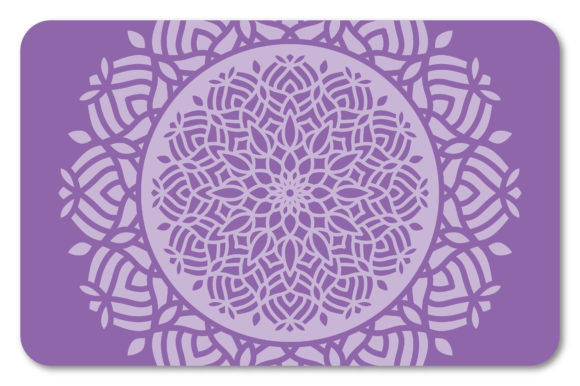
At its core, a mandala background is a balanced geometric composition radiating from a central point. Traditional forms use circles, petals, and intricate linework. Contemporary interpretations stretch those rules: sometimes a mandala becomes an asymmetrical floral burst, a lace-like corner accent, or a semi-transparent overlay that softens a wedding invitation. The magic is in how easily the idea bends while still reading as unmistakably mandala.
Why Designers Keep Reaching for the Mandala
The mandala carries a rare dual quality. It feels both classic and current, ornamental and grounding. That is why it shows up in so many creative contexts. A paper ornament cut from a mandala sheet becomes a delicate keepsake. A tattoo artist uses a mandala half-drop repeat to solve a shoulder composition. A small business owner picks a mandala backdrop for a thank-you card because it says “considered” without needing extra words. The design works because it gives structure before you add your own message or color story.
From a technical standpoint, mandala backgrounds also solve a common creative problem: how to fill space with meaning. Empty corners, plain headers, blank textile repeats — these often feel unfinished. A mandala provides density without visual chaos. The repetition is predictable enough to calm the eye, yet intricate enough to reward a closer look. This makes it an excellent tool for designers who need backgrounds that enhance content rather than distract from it.
Creative Territory That Goes Beyond Paper
One of the most practical joys of owning a high-quality mandala background file set is the sheer variety of forms it can take. When your folder contains EPS, SVG, PNG, and JPEG formats, you are not locked into one kind of output. The same design that graces a wedding invitation suite today can be resized, recolored, and sent to a laser engraver for a wooden sign tomorrow. That kind of flexibility helps freelancers, small business owners, and educators stretch their resources without losing quality.
Think about the range: a vector EPS file can be opened in Illustrator or CorelDRAW, scaled to fit a wide-format wallpaper mural, and still hold crisp edges. That same mandala, saved as an SVG, can be dropped into Cricut Design Space or Silhouette Studio for cutting vinyl decals, stencils, or iron-on transfers. For social media posts or quick print tests, a PNG with a transparent background gives instant placement over photos or colored blocks. And when you need a straightforward full-background image for an invitation backer or a fabric print mockup, a high-resolution JPEG with RGB color space keeps everything vibrant and press-ready.
Matching the Motif to the Medium
Not every mandala works for every surface, and that is where good preparation pays off. A design that looks incredible laser-etched into wood might become too busy when printed small on a business card. The reverse is also true: a minimal, open mandala that feels airy on a greeting card might lose its impact when blown up to bedsheet scale. The key is to treat the mandala background as a starting point that you adjust with purpose.
For paper goods like invitations, stationery, and greeting cards, consider using the mandala as a subtle watermark, a border frame, or a centered emblem. Lower the opacity to let text sit cleanly on top, or select a line-art version that can be printed in a metallic foil. When working with fabric or mugs, vibrant, saturated colors work well because the material absorbs ink differently than paper; test a small swatch first to see how the fine lines hold up. For henna and tattoo stencils, simplified, high-contrast versions without ultra-fine detail translate best to skin.
Customization: Making a Universal Motif Feel Yours
One of the strengths that often gets overlooked is how easy it is to recolor a digital mandala background. All the common file types — especially vectors — can have their color values swapped in minutes. That means a single design can shift from a rich gold and navy palette for a corporate event badge to soft pastels for a baby shower invitation. If you need to match an established brand color, simply eyedrop the hex code and apply it across the repeating elements.
Resizing is equally straightforward. Because EPS and SVG files are resolution-independent, you can scale a mandala from a tiny sticker to a large wall decal without any pixelation. PNG and JPEG files, while not infinitely scalable, still provide generous dimensions that work for most standard print and digital needs. The RGB color space keeps screen and print output consistent when using modern printing workflows, though converting to CMYK for offset jobs is simple if your project demands it.
Layering introduces even more possibilities. Place a delicate mandala background behind bold typography and you get a striking poster. Duplicate and rotate a segment to build a wreath design for the holidays. Stack two mandalas with different line weights and opacities to create a floral background theme that feels entirely new. The design becomes a set of building blocks rather than a single static image.
Practical Ideas That Go Beyond the Obvious
Sometimes the most satisfying projects are the less expected ones. A set of mandala backgrounds can be used to create heat-transfer designs for cloth tote bags, giving each bag a handcrafted look without the time investment of hand-drawing. A small sticker sheet with multiple mandala variations becomes a popular product at craft fairs. Even a business card gains a tactile sense of care when a light mandala texture graces the reverse side.
Wedding stationery suites particularly benefit from the cohesive look a mandala framework provides. Use the same underlying geometry for the save-the-date, the invitation, the menu card, and the thank-you note. By shifting the color or scale, each piece feels distinct while clearly belonging to the same story. For wood carvers and pyrography enthusiasts, the mandala’s radial balance gives a natural flow to circular plaques, coasters, and clock faces — patterns that feel complete even before the first cut is made.
Educators and workshop leaders also find mandala backgrounds useful as creative prompts. Print a simple mandala outline as a coloring sheet for art therapy sessions, or let students digitally alter a vector version to learn symmetry and pattern design. The low barrier to entry means participants can produce satisfying results quickly, which builds confidence and encourages further exploration.
Keeping Your Work Clear and Audience-Friendly
While the mandala is intricate by nature, the way you present it should not confuse the viewer. When using a mandala background for something that also contains text, always check readability. A busy pattern placed directly behind small body copy creates a visual tangle. One simple fix: use a semi-transparent panel or a subtle gradient overlay on top of the mandala but beneath the text. This preserves the background’s decorative value while keeping the message legible.
Consistency across a project matters too. If you are designing a set of items — say, invitation, sticker, and social media graphic — try to use the same mandala or a family of related mandalas. It creates instant brand recognition and feels professionally curated. When adapting for different formats, let the background breathe. A sticker might only need a tight crop of the center medallion, while a wallpaper repeat might require a seamless tile built from the whole motif.
Another tip: avoid over-mirroring or over-symmetrizing to the point of stiffness. The best mandala background designs often have subtle variations that keep the eye moving. If you are working with a digital file, you can sometimes break the perfect symmetry by slightly warping selected paths or introducing a gradient that shifts the weight. Small imperfections, used strategically, add warmth.
From Digital Canvas to Physical Finish
The difference between a good outcome and a great one often lies in testing your chosen file format for the intended output. For laser cutting and CNC work, vector EPS or SVG is essential because the machine reads paths, not pixels. For screen printing on cloth, a high-contrast version might need to be separated into layers by color. For a wallpaper panel, a JPEG at actual size gives you a pixel-level preview of how the edges will meet at the seams. When in doubt, run a small test print on the actual material — paper, vinyl, fabric — to catch any unexpected line thickness issues.
Thanks to the included EPS, SVG, PNG, and JPEG versions, you have a ready kit for nearly any creative scenario. The files are built with RGB color, which suits both digital displays and most modern desktop printers. They can be resized freely, recolored on the fly, and combined with other graphic elements to build something entirely original. This versatility is what turns a single mandala background purchase into a long-term creative resource rather than a one-time download.
Whether you are crafting a henna-inspired invitation suite, carving a wooden mandala wall panel, printing a run of logo stickers, or designing a floral-themed wedding wreath, the mandala background gives you a solid, symmetrical, and endlessly adaptable foundation. It invites you to color inside the lines or completely break them — and that open-ended possibility is precisely what keeps the mandala relevant across centuries and cultures.