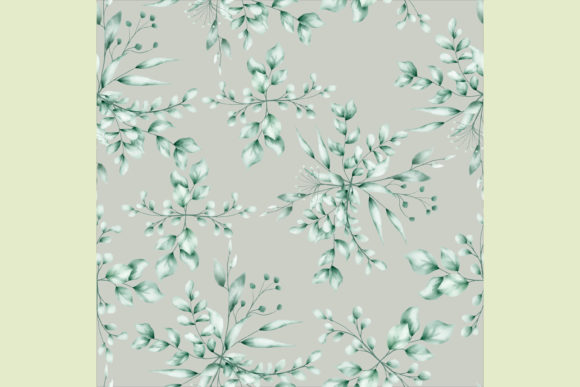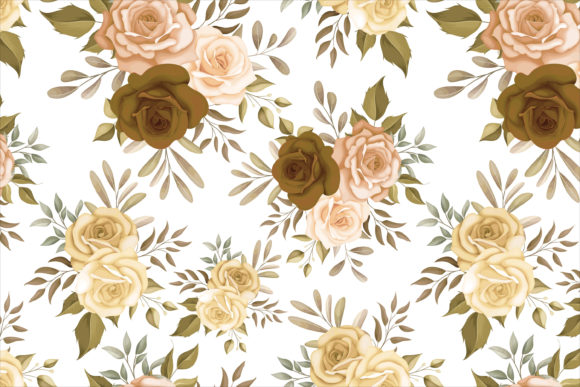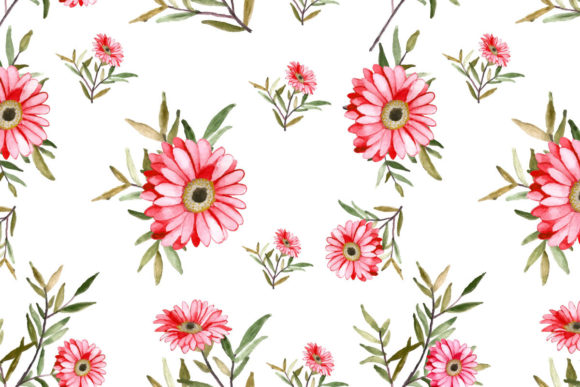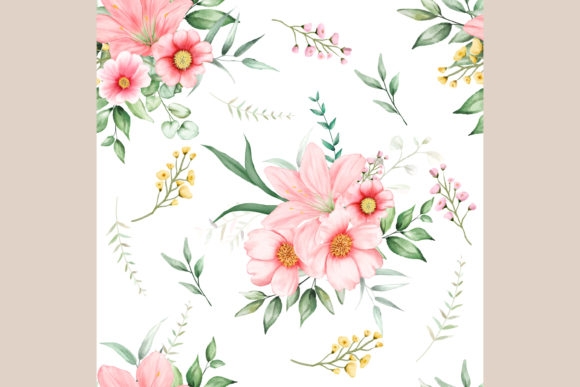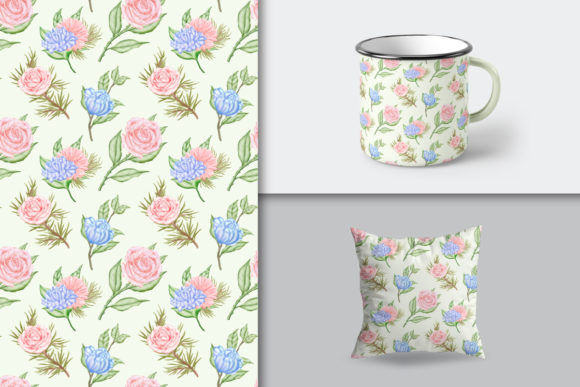
Seamless Pattern Watercolor Flower
When a creative project calls for soft, organic visuals, a seamless pattern watercolor flower design can anchor the entire aesthetic. This type of asset includes gentle blooms and botanical leaf elements that repeat without visible edges, making it suitable for backgrounds, textiles, gift wrap, and digital layouts. The appeal lies in the hand-painted look combined with the repeatable structure—something that feels both artisanal and production-ready. For designers, entrepreneurs, and content creators, having access to a well-built file that is easy to customize and ready to tile across large surfaces removes guesswork and saves time during tight deadlines.
Understanding the Asset Structure and File Formats
A seamless pattern watercolor flower is more than a single image. It is a carefully constructed repeat tile that connects all four edges so that, when duplicated side by side or top to bottom, the join remains invisible. This makes it usable for wallpaper panels, fabric printing by the yard, or full-bleed website headers. The specific download mentioned here comes with two critical file types: an EPS file and a JPEG file. Understanding what each offers helps you move quickly from planning to execution.
EPS for Vector-Based Flexibility and Color Customization
The EPS file is the backbone for serious editing. If you work in Adobe Illustrator, CorelDRAW, Affinity Designer, or even certain cutting machine software, you can open the EPS and recolor every petal, leaf, or background area. Because watercolor textures in vector format are often built with embedded raster images or advanced mesh gradients, you may need to check how your specific software handles complex fills. In many cases, the pattern can be unpacked into its component layers, allowing you to adjust hue and saturation globally or target specific clusters. This level of control matters when you need to align the palette with existing brand colors, seasonal collections, or a client’s visual identity guide.
JPEG for Quick Placement and Broad Compatibility
The JPEG format delivers a flattened, high-resolution raster version of the seamless pattern watercolor flower. This file is ready to use as-is in nearly any software environment: Canva, Procreate, PowerPoint, or even direct upload to print-on-demand platforms. You lose the ability to edit individual elements without going back to the EPS, but you gain instant integration. For tasks like mocking up a clothing label, creating a social media background, or printing a small run of wrapping paper, the JPEG speeds up the workflow considerably. Keep in mind that JPEG artifacts may appear if the file is compressed aggressively; always check the resolution and quality settings before final export.
Where the Pattern Fits in Real Project Workflows
This seamless pattern watercolor flower design fits into a design or product development process at multiple stages. Whether you are working on a client-facing brand package, a personal handmade shop, or an internal marketing campaign, the asset can serve a distinct role before, during, and after major production steps.
During Early Concept and Mood Board Creation
Early in a project, you might drag the JPEG into a mood board app or a Pinterest-style layout. The watercolor floral texture immediately communicates a certain feel—romantic, botanical, gently feminine—which can guide subsequent choices around typography, complementary solids, and photography style. Because it is a seamless pattern, you can fill a canvas with it and see how it holds up as a dominant visual rather than just a tiny swatch. This helps you decide early whether to commit to the style or seek something with more contrast.
As a Core Design Element in Production
Once a concept is approved, the pattern moves into tangible assets. For a clothing line, you might import the EPS into Illustrator, recolor the flowers to match a seasonal palette, and create a tech pack for a fabric printer. The repeatability ensures your garment pattern pieces won’t show jarring breaks at the seams. For stationery, you could use the JPEG to tile a 5x7 inch card background, then overlay text and shipping addresses in a mail merge. For a website, the pattern could become the hero banner with a subtle white overlay to keep text readable. Many users find themselves using the EPS for primary production and the JPEG for quick digital mockups that clients review.
Post-Project Adaptation and Repurposing
The lifespan of a seamless pattern watercolor flower doesn’t end with one job. After the main deliverable, you might revisit the file for social media graphics, presentation decks, or packaging inserts. Because the EPS allows you to extract individual flower clusters or leaves, you can build secondary designs that feel consistent with the core project without re-licensing new artwork. This kind of cross-use supports brand cohesion and reduces the time spent hunting for matching secondary assets.
Practical Implementation Strategies Without the Guesswork
Integrating this pattern smoothly depends on a few key preparatory steps. Rushing straight to print without checking technical details often leads to misaligned repeats or color shifts. The following observations come from how experienced users handle watercolor seamless patterns across different mediums.
Check the tile dimensions and bleed requirements. Most seamless pattern files are square, but the exact pixel or inch dimensions matter for your intended substrate. If you are printing fabric through Spoonflower or a similar service, upload the JPEG at the recommended DPI (often 150 to 300) and test a swatch first. Confirm that the repeat aligns perfectly; even a one-pixel misregistration will be visible on a long run.
Color-proof on your intended material. The watercolor washes may look luminous on screen but print duller on uncoated paper or absorbent cotton. If you have the EPS, extracting the specific CMYK or RGB values and printing a test strip saves wasted material. Some watercolor textures include subtle transparency effects that require flattening or conversion before sending to certain RIP software. Always rasterize complex transparencies if your printer requests it.
Create a pattern swatch library. If you use Adobe Illustrator, you can save the recolored EPS as a pattern swatch directly in the Swatches panel. This makes it available for any future document as a fill option. For teams, storing the original EPS along with a few pre-recolored versions in a shared asset library (such as Adobe Creative Cloud Libraries or a cloud folder with clear naming) keeps everyone on the same visual page. This step prevents colleagues from accidentally using a low-resolution screenshot in production materials.
Tailoring the Design Through Color Customization
One of the standout features of this particular seamless pattern watercolor flower is that it is built for color changes. A common mistake is assuming watercolor elements cannot be modified without losing the delicate wash effect. In reality, many well-prepared EPS files use global colors or well-named layers. You can select all instances of a specific pink flower and shift it to a soft lavender while preserving the tonal variations. This is essential for brands that cycle through seasonal color stories or want to align the pattern with a specific event palette.
When customizing, avoid over-saturating the watercolor texture. The charm of this style lies in its luminous, slightly transparent quality. Pushing saturation too far can clip subtle gradients and create a digitized, flat appearance. Instead, work with slight hue rotations and gentle brightness adjustments. If you need a darker background, consider adding a solid color layer beneath the watercolor elements rather than altering the flowers themselves. This keeps the delicate edges intact.
Organization and Long-Term Asset Management
A pattern file that comes with both EPS and JPEG variants can quickly become messy if you duplicate it across projects without a naming convention. Establish a folder structure that includes the original files, a “recolored versions” folder, and a “test prints” folder for any proofing you do. Name files with relevant tags, such as watercolor-floral_peach-edit_v02.eps, to avoid confusion weeks later. If you design for multiple print providers, keep notes on which color profile and repeat size each one preferred. This small upfront organization reduces frustration during reorders or when you adapt a past design for a new product.
Over time, you may collect several watercolor floral seamless patterns from different sources. Note which ones have similar repeat dimensions and styles. They can sometimes be mixed— for example, using the leaves from one pattern as a complement to the flowers from another—if their licensing allows modification and combination. This breathing room turns your asset library into a flexible kit rather than a set of standalone pieces.
Compatibilities and Edge Cases
While the pattern works in many contexts, some workflows require extra care. If you intend to use the seamless pattern watercolor flower for a Cricut or Silhouette cutting project, the JPEG may be sufficient for print-then-cut tasks, but you will likely need to trace or vectorize it for a cut line. The EPS can provide clean boundaries for that. However, extremely fine watercolor splatters or overlapping leaves might produce jagged cut paths if not simplified. Testing on scrap material is wise.
For large-scale wall murals, ensure the JPEG resolution is high enough to avoid pixelation. Most home wallpaper requires at least 150 DPI at full size. If the source JPEG is 300 DPI but only 12x12 inches, tiling it across a 10-foot wall stretches the resolution. In such cases, you may need to upscale carefully using tools like Photoshop’s Preserve Details 2.0 or Topaz Gigapixel, while accepting some loss of fine watercolor texture. The EPS, being resolution-independent for any vector parts, can help reconstruct the base, though raster watercolor strokes still have limits.
Where This Fits into a Broader Design Mindset
A seamless pattern watercolor flower isn’t just a quick decoration; it’s a modular design tool that can reduce the need for custom illustration on every project. By learning to recolor, scale, and combine it with other elements, you build a repeatable process that serves multiple products. For a stationery business, the same pattern might appear on notebooks, thank-you cards, and shipping inserts, creating a cohesive unboxing experience. For a freelance designer, it becomes a go-to resource for pitch decks and concept presentations, lending a polished, tactile feel without starting from scratch each time.
The combination of easy editing, customizable color, and a dual-file format means less time troubleshooting technical issues and more time refining the overall composition. Whether you are printing fabric, creating digital wallpapers, or designing custom gift wrap, the pattern’s underlying structure does the heavy lifting, leaving you to make the design decisions that actually matter to your audience.
Approach the pattern as you would any professional resource: test, document, and archive. When you have a clear method for storing originals, modifying colors, and preparing files for each output, you turn a single purchase into a lasting, adaptable asset that flexes across your creative work.