Working with Line Art Logo Design and Business Card Assets
When visual consistency matters and time is tight, a well-curated design set can bridge the gap between a scattered idea and a polished brand touchpoint. The Line Art Logo Design and Business Card collection is one such resource, bundling hand-painted shapes, line art compositions, backgrounds, and ready-made print layouts into a single package. Instead of starting every business card, flyer, or social graphic from a blank canvas, users get a foundation built around an artisan aesthetic. This article breaks down what the kit offers, how it performs in real projects, and who stands to benefit most from adding it to their creative toolkit.
What You Actually Get in the Collection
The set centers on a minimal, organic visual language. At its core are painted shapes and patterns distributed across six mixed colors. These aren't hyper-polished vector illustrations—they carry the slight irregularities of hand-painted strokes, which gives them warmth and personality. In addition to the abstract shapes, the package includes:
- Floral line arts and single monoline designs in transparent PNG format, suitable for layering over photos or solid backgrounds.
- Pre-made abstract compositions delivered as high-resolution JPG and transparent PNG files, ready to drop into a layout.
- Pre-made backgrounds in both JPG and transparent PNG formats, offering quick starting points for stationery or digital canvases.
- Artsy alphabets that work as decorative initials or logo-type elements rather than full typographic fonts.
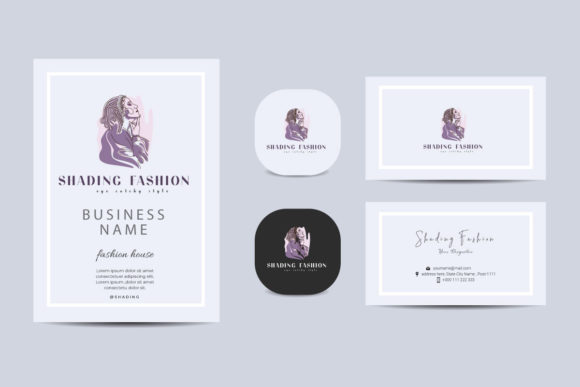
On the template side, the business card print size is set at 3.5 by 2 inches—the standard North American calling card format. The flyer layout comes at 280 by 396 millimeters, which sits between A4 and A3 dimensions. This means the flyer can fit an A3 sheet with room for trim marks or be scaled down to smaller ISO sizes with only minimal composition adjustments. Having these preset sizes saves time for anyone who needs print-ready output without recalculating bleeds and safe zones from scratch.
Format and Quality Considerations
The heavy reliance on transparent PNG files is a practical choice. Unlike vectors, PNGs are raster images, so their scalability depends on the pixel dimensions provided. For logo usage, this introduces a ceiling: you won’t be able to enlarge a PNG-based emblem for a storefront sign without some quality loss. However, for the stated applications—business cards, flyers, social media images, blog graphics—well-produced PNGs at 300 DPI will hold up comfortably. The pre-made backgrounds and compositions, when saved at dimensions matching the flyer spec (roughly 3300 by 4700 pixels at print resolution), produce clean results on press. If you plan to use only the individual painted shapes or monoline flowers as decorative accents, resolution is rarely an issue because these elements are typically placed at smaller sizes within a layout.
An often-underappreciated advantage of transparent PNGs is their instant compatibility with Canva, Photoshop, Affinity, and similar editors. You can drag a painted shape onto a colored block, adjust blending modes, and build a bespoke card design within minutes. The JPG backgrounds, while lacking transparency, serve as complete scenes when you need a finished backdrop without manipulation. The six mixed colors encourage a restrained palette, which naturally pushes designs toward cohesion across different mediums. On the flip side, the absence of vector source files means recoloring options are limited to what bitmap editing can achieve—hue shifts, overlays, or desaturation—but you won’t get the infinite clean rescaling and easy spot-color separation that vector logos demand for professional offset printing.
Applying the Artisan Line Art to Branding Projects
Brands that lean into a handmade, botanical, or minimalist look will find these assets align quickly. A small-batch ceramics studio, for example, could combine the flower line art with an artsy alphabet initial to form a circular logo mark, then use the pre-made compositions as packaging inserts or thank-you postcards. The painterly shapes work as subtle underlays for Instagram quote posts, product tags, or blog header images, adding texture without overwhelming the message.
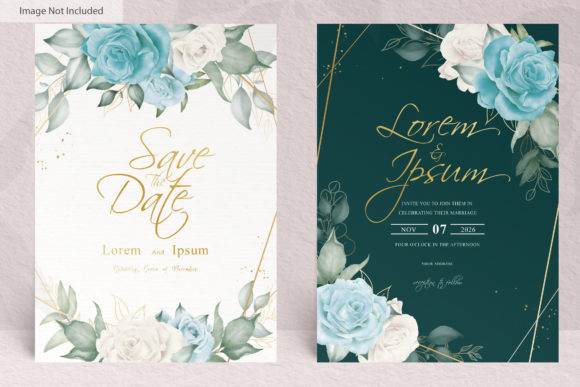
For event stationery, the kit becomes a flexible system. Wedding planners or couples handling DIY invitation suites can take the floral monoline elements, pair them with the provided abstract backgrounds, and produce save-the-dates, RSVP cards, and menus that share a consistent visual thread. Because the shapes are delivered as individual transparent files, it’s straightforward to create variations—move a floral spray from the bottom-left corner of a business card to the top-right of a flyer, for instance—without the design feeling repetitive. The Line Art Logo Design and Business Card assets essentially act as a modular visual vocabulary; you choose the elements that suit a particular piece and arrange them to match your hierarchy of information.
Where the Collection Performs Best
In practice, the strengths of this set emerge most clearly in three areas:
- Quick-turnaround promotional materials. A marketer promoting a seasonal pop-up or a local workshop can pull a pre-made composition, overlay an event title with the artsy alphabet, and have a flyer ready in under an hour. The hand-painted character gives the output a bespoke feel that stock vector templates sometimes lack.
- Social media consistency. Bloggers and content creators who publish multiple weekly posts can maintain a recognizable visual throughline by rotating between the different backgrounds and line art elements. Over time, audiences start associating the organic shapes and limited palette with the brand.
- Low-budget brand launches. Entrepreneurs testing a business idea or freelancers refreshing their personal identity can avoid the expense of custom illustration while still presenting a cohesive set of business cards, flyers, and digital profiles.
It’s also worth noting that the 3.5 by 2-inch business card layout leaves enough room for essential contact details without crowding the artwork. The flyer at 280 by 396 mm provides a generous canvas, ideal for showcasing multiple products, an event schedule, or a detailed service list—plenty of breathing space even after incorporating the pre-made abstract compositions.
Who Stands to Gain the Most
The value of this bundle is highest for users who already possess basic layout skills and need creative raw materials rather than a fully templated, rigid system. That includes:
- Freelance graphic designers accumulating a varied asset library for mood boards, pitches, or small client jobs where a full custom illustration isn’t in the budget.
- Small business owners (bakers, florists, counselors, vintage shop curators) who create their own marketing collateral and want to avoid the generic look of overused template sites.
- Wedding and event planners who produce stationery sets regularly and appreciate having a cohesive, artisan kit that can be recolored and rearranged for different couples.
- Content creators and bloggers seeking to strengthen their visual brand across multiple platforms without outsourcing every image.
Those who need highly scalable, spot-color vector logos or full alphabet fonts for commercial products will likely need to supplement these resources or look for vector-based alternatives. The kit’s strength is its handcrafted, imperfect charm, which naturally suits businesses that emphasize human touch, creativity, or nature-inspired themes.
Limitations to Keep in Sight
No resource is universally perfect, and this Line Art Logo Design and Business Card collection has boundaries worth respecting. The raster-only format means that if you design a logo using the supplied elements and later need to print it on a large banner, you may encounter pixelation unless the original PNG was exceptionally oversized. The artsy alphabets are not installable fonts; they’re individual image files, so creating a full wordmark requires manual placement in a design program—manageable for short brand names but tedious for longer text. Additionally, the flyer size of 280 by 396 mm is not a standard ISO dimension like A4 or A3, so printers may need to trim to an actual A3 sheet or you’ll have to scale the artwork proportionally to fit common templates. Checking printer specifications before finalizing artwork avoids alignment surprises.
The six mixed colors, while thoughtfully grouped, might not match every brand’s primary palette out of the box. Recoloring a PNG in a photo editor is possible, but maintaining the subtle painterly color variations requires some skill; a simple hue shift can flatten the organic feel. Users with basic software knowledge can still get good results by overlaying semi-transparent color layers, but it’s an extra step.
Making the Elements Work Together Over Time
A practical way to approach this bundle is to treat it as a design starter kit. Spend a session pulling your favorite shapes, a couple of monoline florals, and one or two backgrounds into a master document. From there, create a few core templates—a business card, a flyer, a social post square—and save them as your base layers. As needs arise, you can duplicate and tweak rather than sift through files every time. Because the transparent PNGs have no white boxes around them, layering becomes intuitive; a floral element placed on a photo background for a blog banner looks organic rather than pasted. The pre-made compositions can also serve as standalone Instagram story backgrounds or presentation slide overlays when you need something quickly.
Long-term value depends on how well the artisan style aligns with your ongoing projects. If your brand evolves toward a more corporate or ultra-minimal direction, the hand-painted marks might feel out of step. But for the creator, maker, or service provider whose identity hinges on warmth and approachability, these assets can stay useful for years, across multiple marketing cycles and platforms.
Is This the Right Fit for Your Workflow?
Deciding whether to incorporate the Line Art Logo Design and Business Card set comes down to your typical output and how much control you need. If you routinely produce print and digital collateral for a brand that benefits from an organic, artistic edge—and you appreciate having ready-made components that still allow significant rearrangement—the package delivers solid practical value. Its real strength isn’t in making you a logo designer overnight, but in giving you a coherent visual language that saves hours of manual illustration while maintaining a professional, custom feel. As with any resource built on raster images, understanding where and how you’ll apply the files will prevent frustration. When used within its designed scope, the collection can elevate business cards, flyers, and an entire visual presence with a consistency that feels both intentional and handmade.