Wedding Invitation Card Watercolor Leaf: A Floral Template with Practical Appeal
The search for a balanced, nature-inspired invitation design often leads to assets that combine soft artistry with functional editing. The Wedding Invitation Card Watercolor Leaf template fits this space. It’s a digital invitation file built around watercolor botanical elements, colorful floral clusters, and leaf accents. What sets it apart from purely decorative downloads is the deliberate focus on editable components, which makes it relevant for more than just a single event. Professionals who handle client projects, small business owners managing brand touchpoints, or individuals planning personal celebrations can evaluate it as a resource that bridges aesthetic warmth with practical customization.
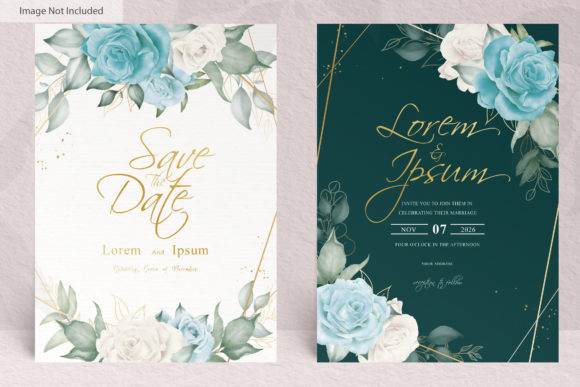
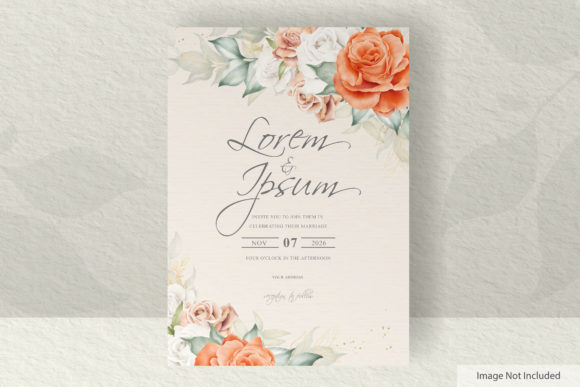
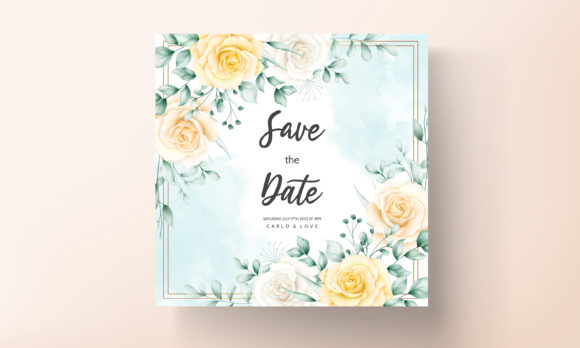
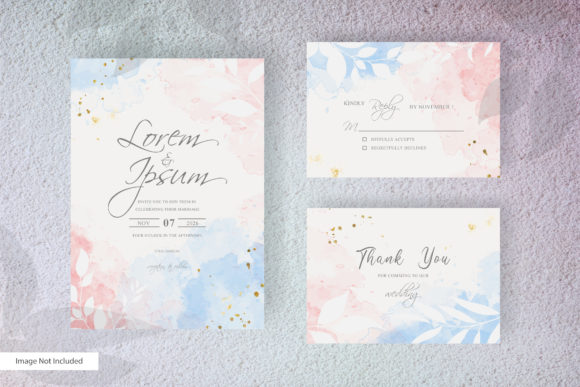
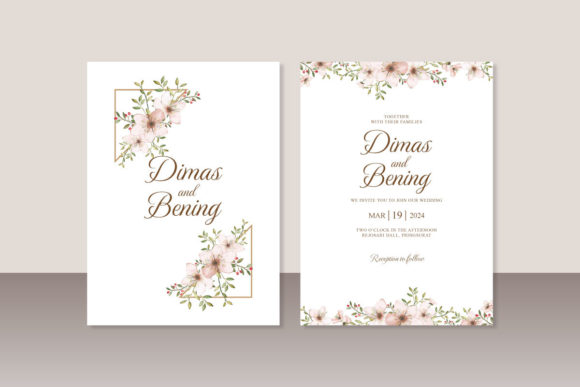
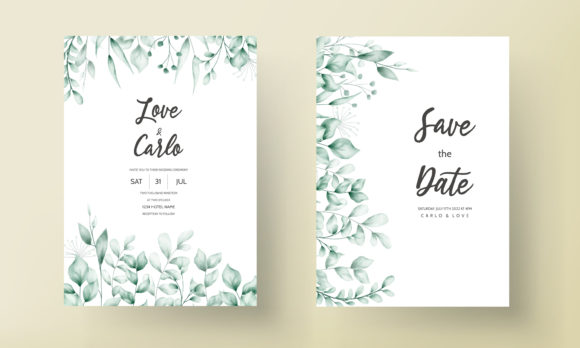
The design uses layered watercolor strokes for foliage and blossoms, often arranged in a frame-like composition. Color palettes tend toward muted greens, blush pinks, soft yellows, and lavender tones, though the exact look depends on how one adjusts hues during editing. The botanical mood works for weddings, but it also suits birthday parties, bridal showers, garden events, and even informal business gatherings that need an organic feel. Because the illustration is cheerful yet restrained, it avoids falling into overtly seasonal or thematic traps, which widens its usable window.
What Makes This Watercolor Leaf Invitation Template Worth Examining
Many template downloads deliver beauty on the surface but struggle with real-world adaptability. A closer look at this specific Wedding Invitation Card Watercolor Leaf asset reveals a few characteristics that hold up under practical pressure. The composition typically offers defined areas for event details—names, date, venue, and RSVP information—without crowding the floral artwork. This spatial balance means you can add necessary text without compromising the illustration’s breathing room.
Aesthetic Blend of Flora and Foliage
The visual language combines soft-edged watercolor leaves with delicate floral shapes, often in a colorful but controlled palette. The result avoids the flat, overly digital look that plagues some vector invitations. When printed on textured cardstock or even smooth matte paper, the watercolor effect retains a hand-painted feel. For digital-only use, such as email invitations or social media event banners, the same illustration reads clearly on screens without appearing muddy. This dual-format clarity is a practical advantage that deserves mention.
Key Features That Influence Daily Use
Beyond the artwork itself, the template’s value rests on how it accommodates different skill levels and software environments. The official description highlights easy editing and customizable text colors, and these claims align closely with what users will encounter if they have basic familiarity with design tools. Simultaneously, the included file types—EPS and JPEG—open distinct paths for customization, each with its own strengths and constraints.
Customizable Text Color and Layout Flexibility
The ability to change text colors isn’t merely a decorative extra; it’s a functional necessity for brand consistency or personal taste. With the vector file, you can select individual text elements and assign them any shade from a full spectrum—matching wedding color schemes, corporate accents, or birthday party themes. This feature also lets you adjust contrast against the background so that names and dates remain legible even if the floral artwork includes darker or more saturated areas. In practice, someone organizing a fall wedding could shift font hues from soft blush to deep terracotta while preserving the same leaf composition, making the template feel tailored rather than off-the-shelf.
File Formats: EPS for Precision, JPEG for Convenience
The inclusion of both an EPS file and a JPEG file acknowledges that not everyone works inside the same ecosystem. The EPS, as a vector format, stores artwork as mathematical paths. This means you can rescale it infinitely without pixelation, adjust individual elements, recolor leaves or petals, and modify typography with complete control—provided you have software like Adobe Illustrator, CorelDRAW, or the free tool Inkscape. For print production, this is the reliable format. Print shops often request vector files for sharp, professional output at any size, from standard 5×7 cards to larger posters.
The JPEG, on the other hand, offers immediate usability. It opens in virtually any image viewer or basic editor. Users who don’t own vector software can still set the JPEG as a background in Canva, Photoshop Elements, or even Microsoft Word, then overlay text boxes with their own font choices. However, when relying on the JPEG, recoloring the existing text isn’t straightforward because the image is flattened; you’d typically hide or crop out the demo text and add your own layer. So while “customizable text color” applies fully to the EPS workflow, the JPEG path requires a different approach—placing new text rather than editing embedded ones. Understanding this distinction helps avoid frustration.
Who Stands to Gain the Most from This Invitation Template
Different user groups will extract different levels of value from the Wedding Invitation Card Watercolor Leaf design. Identifying where you fit can save time and set realistic expectations.
Couples and Individuals Planning Personal Celebrations
For someone coordinating their own wedding or milestone birthday, the template reduces the need to hire a custom illustrator. If you already have access to vector software—or are willing to learn basic editing in a tool like Inkscape—you gain a semi-custom result at a low cost. The watercolor leaf motif provides a finished, cohesive look that can be echoed across RSVP cards, menus, and thank-you notes by reusing the same artwork with adjusted text. The time saved compared to designing from scratch is significant, and the final product still feels personal because you control the wording and color shifts.
Freelance Designers and Event Planners
Professionals who juggle multiple client projects often need curated starting points that they can rapidly refine. The EPS format makes this template a useful base for further modification—swap out fonts, reposition leaf clusters, or incorporate it into a wider stationery suite. Since the file retains full editability, you can align the invitation with strict brand guidelines or a client’s specific mood board. Event planners without in-house design teams can use the JPEG file to quickly mock up proposals or share draft concepts with couples, then hand the EPS to a printer once details are finalized.
Small Business Owners and Marketers
Businesses with a soft, organic brand identity—such as florists, wellness coaches, botanical skincare lines, or tea rooms—may find secondary uses for this template beyond invitations. The watercolor leaf illustration can appear on promotional postcards, workshop announcements, or social media graphics. Because the vector file is editable, you can isolate a single leaf or flower to create subtle branding elements. This reuse potential amplifies the asset’s long-term practical worth.
Real-World Use: From Wedding Invitations to Multi-Purpose Stationery
While the name emphasizes weddings, the template’s leafy, colorful character adapts naturally to birthday parties, baby showers, retirement celebrations, and even spring-themed corporate picnics. The absence of overt wedding-specific motifs—such as rings, veils, or formal script that says “Mr. and Mrs.”—keeps the design flexible. A common workflow looks like this: open the EPS file in vector software, set the text layers to reflect the event type and details, adjust the leaf and flower colors to match a chosen palette, and export a high-resolution PDF for printing. Alternatively, a less technical user might open the JPEG in Canva, upload it as a background, add a semi-transparent overlay for readability, and type fresh text over the top. Both approaches yield useful results, though the vector route produces sharper typography and more seamless color integration.
For digital distribution, the JPEG can be resized for e-vite platforms or social media. Keep in mind that the original JPEG dimensions matter; upscaling it too much will soften details. If you need a very large digital banner, starting from the EPS and exporting at the correct pixel dimensions is the safer, quality-preserving choice.
Quality, Consistency, and Print Reliability
Print quality depends significantly on how you handle the files. The EPS output, when exported correctly to a 300 DPI PDF or TIFF, will produce crisp text and smooth color transitions on professional presses. The watercolor textures are embedded as vector objects or linked raster effects, so they maintain their gentle gradations. On a home inkjet printer, results can still be good if you use appropriate paper—lightly textured matte stock often complements the watercolor aesthetic better than glossy photo paper. For the JPEG route, if the file is delivered at a sufficient resolution (typically at least 300 DPI at the intended print size), prints will look acceptable for personal use, though text added externally may not integrate as cleanly with the background lighting and shadows.
Consistency across multiple pieces is another strong point for those who reuse the template. By saving a master copy with your preferred color adjustments, you can generate matching items without re-editing from scratch each time. This consistency matters for cohesive event branding or repeated client projects.
Potential Limitations and Sensible Workarounds
No digital template covers every scenario perfectly. The Wedding Invitation Card Watercolor Leaf design, while adaptable, does come with considerations. First, the EPS file requires vector editing software. While free options like Inkscape exist, there is a learning curve for absolute beginners. If someone isn’t comfortable with layers, path selection, and font installation, the promised “easy to use and edit” experience may initially feel less straightforward. One workaround is to allocate time for a short tutorial or to outsource the final text placement to a low-cost designer.
Second, the included JPEG, while convenient, does not support recoloring of the existing text. Users who assume that a PDF or simple program can edit the pre-written words may be disappointed. The most reliable approach is to treat the JPEG as a background placeholder and add a text box in a separate editing layer. This requires that you match fonts if you want to preserve the original typographic feel, which might mean searching for a similar free font or using your own.
Third, the watercolor leaf and floral arrangement is pre-composed. While you can move elements around in the vector file, radically restructuring the layout demands design skill. The template works best when you accept the general composition and focus on text and color modifications. If your project requires a fully bespoke arrangement, this template may serve better as a mood reference than a final deliverable.
Long-Term Value for Multiple Events and Projects
Unlike a physical card that serves one event, a digital template can be reused indefinitely. The Wedding Invitation Card Watercolor Leaf asset offers this kind of endurance. A couple might use it for their wedding, then repurpose the same artwork two years later for a baby shower or a milestone birthday. A designer could incorporate the leaf elements into several client projects, changing color palettes and typography each time. Because the vector file never degrades, the resource doesn’t expire; it remains a flexible component in a creative toolkit.
This reusability also means the cost per use becomes negligible over time. Even someone who only uses the template once for a single event and then passes it along to a friend with basic editing skills is extracting extra value. The file’s generous terms—often standard for such marketplaces—usually allow personal and commercial use within completed end products for clients, though checking the specific license is always wise.
Practical Recommendations for Getting the Most from This Template
Based on observation, a few habits bring out the template’s strengths while sidestepping common pitfalls. Start with the EPS file if you have vector software—even if you’re new to it, the control over text and color is worth the brief adjustment period. Color-sample from the artwork itself when choosing text hues; picking a pink from a flower or a green from a leaf creates natural harmony. Print test copies before ordering a bulk run, checking how the watercolor gradients translate to your chosen paper. If you’re using the JPEG in a drag-and-drop editor, set the background image to a slight transparency or add a subtle white block behind text to guarantee legibility without losing the leafy backdrop.
For those who need to extend the design to other items—thank-you cards, table numbers, or menus—consider extracting a small section of the leaf border or a single flower from the EPS to use as a repeating motif. This ties the entire stationery suite together without overwhelming recipients with identical full-frame artwork on every piece.
In the end, the Wedding Invitation Card Watercolor Leaf template earns its place not as a one-click miracle, but as a thoughtfully constructed asset for someone willing to engage with it at a basic editing level. The watercolor leaves and colorful floral details provide a warm, polished foundation. The inclusion of both vector and raster formats, along with editable text options, gives users room to shape the final output according to their event, brand, or personal taste. It works for weddings, birthdays, and a range of celebrations where nature-inspired visuals feel appropriate. Understanding the distinct roles of the EPS and JPEG files, and being realistic about your software comfort zone, will determine whether this template becomes a quick solution or a source of unnecessary friction. With that clarity, many adults—from busy entrepreneurs to hands-on party planners—will find it a reliable, repeatable resource in their creative and professional projects.