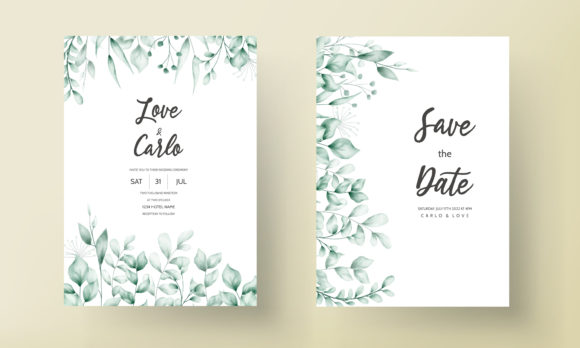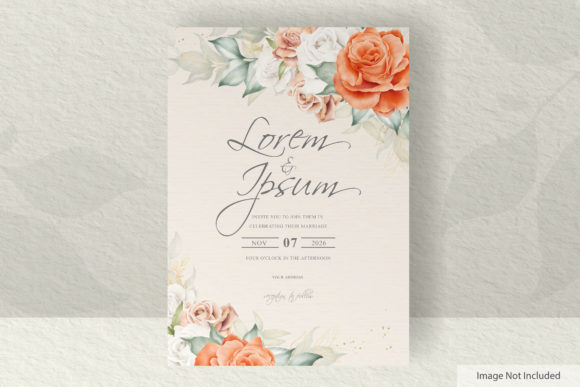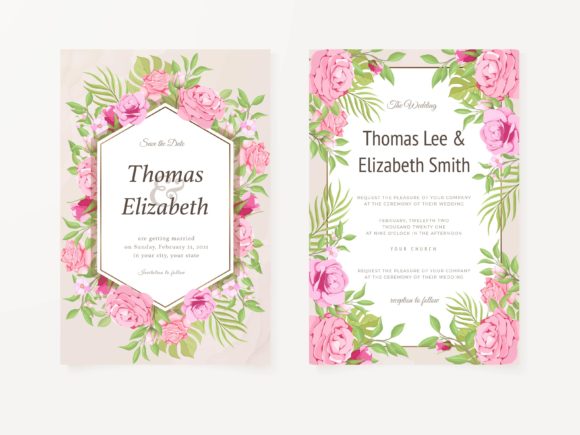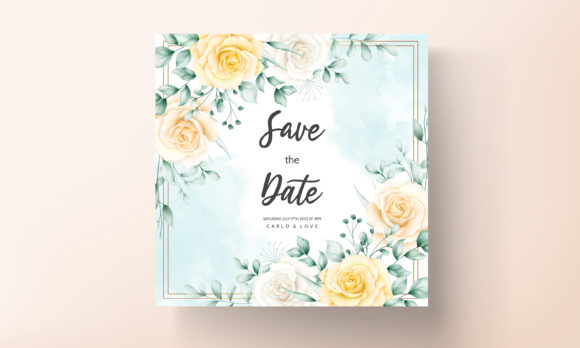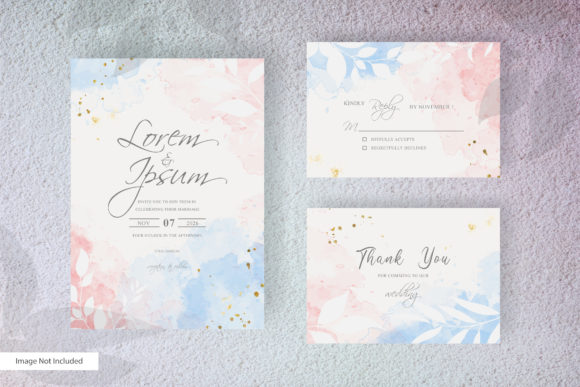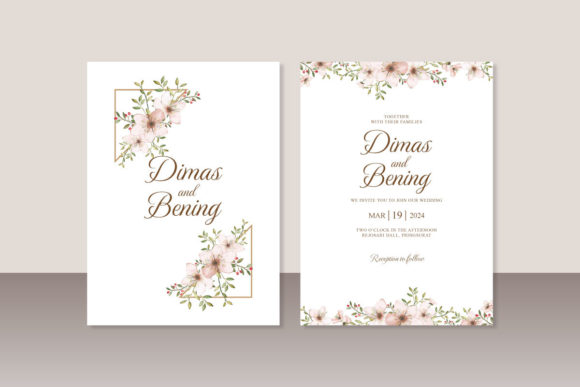
Floral Watercolor for Wedding Invitation
Defining the mood of your celebration begins long before the first glass is raised. It starts with the envelope that lands in a loved one’s mailbox. A floral watercolor for wedding invitation template built from real hand-painted washes brings an immediate sense of warmth, artistry, and organic elegance that digital-only designs often struggle to replicate. This isn't simply a card—it's a first glimpse into the atmosphere of your day, captured through soft, bleeding pigments and delicate petal strokes. We’re talking about an editable design resource that merges traditional art techniques with modern convenience, offering a deeply personal touch without the steep price of custom illustration.
Understanding the Appeal of Hand-Painted Stationery
For many couples, the search for the perfect invitation confronts a common dilemma: how to achieve a luxury, high-end aesthetic while staying within a modest budget. The tactile quality of watercolor, with its subtle gradients and gentle imperfections, communicates thoughtfulness. A digital template that originates from a genuine hand-painted piece retains this soul. The product in question is a direct reflection of that need—it’s a digital download containing a sophisticated watercolor background made by a human hand using real brushes and pigment. Because the text is fully editable, you maintain complete control over the typography, wording, and layout, yet the artistic foundation remains uncompromised. This bridges the gap between mass-produced printing and commissioned artwork.
Who Benefits Most from This Approach
Different individuals approach wedding planning with unique priorities. Understanding these perspectives helps illuminate why an editable watercolor template becomes a practical solution for so many.
- The Time-Conscious Couple: They need beautiful results quickly. Waiting weeks for a custom designer and back-and-forth proofs isn’t feasible. A template provides instant access—download, type, and print.
- The Budget-Minded Planner: Professional watercolor commissions often start at hundreds of dollars just for the painting, before layout or printing costs. An editable file costs a fraction while delivering a comparable visual impact.
- The Creative DIY Enthusiast: Those who love adding personal flourishes. Since the background is already painted, they can focus energy on selecting the perfect wording, font pairings, and envelope liners, rather than struggling to paint from scratch.
- The Sustainability Seeker: Digital files reduce waste. You print only what you need, test on different paper stocks, and avoid excess inventory that often comes with minimum order quantities from printing houses.
Solving Real Design Challenges with a Floral Watercolor Template
One of the biggest hurdles in DIY invitation creation is achieving a cohesive look. Amateur designs can feel disjointed when flat icons are placed next to ornate scripts. The floral watercolor for wedding invitation template resolves this by offering a pre-existing, professionally balanced background. The blooms and textures are composed as an integrated piece, so your attention shifts solely to typography alignment. This reduces decision fatigue. Instead of trying to coordinate five different design elements, you're refining text over a masterpiece.
Another practical challenge is file compatibility and print readiness. This solution addresses that directly by providing a zip file containing Ai (Adobe Illustrator), EPS, and high-resolution JPG formats. You are not locked into a single piece of software. For users familiar with vector editing, the Ai and EPS versions allow infinite scaling without quality loss. For those who prefer simpler tools or online editors, the JPG format provides immediate usability. The inclusion of only free fonts means you won’t encounter unexpected licensing issues or missing glyphs when you open the file, which is a common frustration with premium templates that default to expensive typefaces. You can download the specified fonts at no cost and begin personalizing immediately.
Practical Implementation and Customization Flow
To turn a digital file into a tangible keepsake, the process should be straightforward. Here is a typical workflow that respects the handmade origin of the template while embracing digital flexibility.
- Download and Unzip: Access your files immediately after purchase. Extract the contents to access the Ai, EPS, and JPG versions.
- Choose Your Canvas: Open the format that matches your comfort level. Adobe Illustrator gives complete control over layers, while free alternatives like Inkscape or even Canva can handle the EPS or JPG files with minor adjustments.
- Edit the Text Placeholders: Click into the text layers. Replace the sample names, dates, and venue details with your own. Because the fonts are free, they will render accurately as long as you’ve installed them. Feel free to adjust the font size, spacing, and color to match your theme—a deep navy text often renders beautifully over soft blush watercolor washes.
- Fine-Tune the Palette (Optional): With vector files, you have the power to subtly shift the watercolor tones. For instance, if your wedding features lavender instead of peach, you may apply hue adjustments globally. However, the beauty of the original hand-painting often is best preserved with minimal digital recoloring, letting the organic blends shine.
- Export for Print: Save your final file as a high-resolution PDF or a 300 DPI JPG. Ensure you use the CMYK color profile for the most accurate printed representation of those delicate watercolor pigments.
- Test and Refine: Print a single sample on your preferred paper—textured cotton or a smooth matte stock often enhances watercolor textures brilliantly. Evaluate the weight and adjust your printer settings before running the full batch.
Achieving Professional Outcomes from an Editable Resource
The end objective is always an invitation that feels bespoke, never templated. The fact that this is a template doesn't have to mean it looks like one. There are strategies to elevate the final result and make the most of the hand-painted watercolor background. First, consider paper selection. A heavyweight, cold-press paper with a slight texture can mimic the feel of genuine watercolor paper, making the printed invitation look and feel like an original piece of art. Your guests will notice the difference when they hold it.
Second, extend the design beyond the card. The floral watercolor background can be cropped or repurposed for matching elements. Use a section of the painting for a thank-you card, a menu, or a seating chart. This creates a suite of stationery that feels thoughtfully coordinated rather than repetitively copied. Since you have the source files, you can isolate a single bloom for smaller tags or create a consistent brand for your event. This consistency is what distinguishes a well-planned wedding from a collection of disjointed details.
Third, embrace the nuance of free fonts. The requirement that only freely available fonts are used is actually a hidden advantage. It removes the risk of hidden costs and often leads to a cleaner, more classic typographic palette. You can explore Google Fonts libraries to pair a readable serif with a romantic script. The key is to let the font support the watercolor art, not compete with it. A restrained typographic hierarchy keeps the focus on the brush strokes and color blends, which are the true hero elements of a floral watercolor for wedding invitation.
Exploring Varied User Journeys and Contexts
Not every user approaches this product with the same technical skill set, and the design accommodates that spectrum gracefully. For a graphic designer managing a client’s wedding identity, the Ai and EPS formats are non-negotiable. They will dive into layers, adjusting opacity, experimenting with blend modes, and integrating the artwork into a larger brand system. The precision and editability save them hours that would otherwise be spent licensing stock imagery or attempting to recreate a painted effect digitally.
For a relative or friend helping to assemble invitations, the JPG file is a lifeline. They can open it in a basic word processor or an online design platform, add text boxes, and place an order with a local printer without ever touching professional design software. The result still carries the soul of a hand-painted piece because the imagery remains unchanged. This democratizes access to high-end design, making it feasible for smaller, intimate gatherings or last-minute celebrations where hiring a professional isn't practical.
Additionally, consider the scenario of an international couple planning a multicultural wedding. They may need to produce invitations in multiple languages. The fully editable text layers allow them to swap out English for French, Spanish, Mandarin, or any other script that the free font supports, while the universal appeal of watercolor florals remains culturally resonant and visually harmonious across all versions.
Unique Considerations for Long-Term Value and Use
An often-overlooked aspect of investing in digital wedding assets is their potential for reusability. A beautiful floral watercolor painting doesn’t have to retire after the wedding day. Since you hold the editable source files, the artwork can transform into future correspondence. The same blooms that graced your invitations might later appear on a first anniversary card or be framed as a piece of home décor. The brush strokes become a lasting symbol tied to your personal history.
On a technical note, always back up your zip file in multiple locations. Unlike physical goods, digital products can be lost to hard drive failures. Storing a copy in cloud services ensures that you can revisit the artwork for years. When sharing files with a printer, confirm their preferred format and resolution. Most professional printers will happily accept PDFs exported from the editable versions, but providing the JPG as a fallback for quick office supply printing can be a pragmatic backup plan. The combination of Ai, EPS, and JPG in your download ensures you're prepared for nearly any production requirement, whether high-end letterpress or rapid digital printing.
Making the Decision with Confidence
Choosing your wedding stationery is a decision that sets the visual tone for your celebration. A floral watercolor for wedding invitation that arrives as an editable, hand-painted template respects both the artistry of traditional media and the practical demands of contemporary event planning. It puts you in the director’s seat, allowing you to personalize every word while resting on a foundation of genuine, organic brushwork. The challenges of budget, timing, and customization are met with a resource that is flexible, approachable, and rooted in the human touch of watercolor pigment moving across paper. When you look back at your invitation suite, what you’ll see isn’t the efficiency of a download link, but the romance of a painted garden captured exactly as you envisioned it.